Shops in Concord use alignment, balancing, and rotation in the same breath, so drivers reasonably assume they are three names for one job. They are not. Each one fixes a different problem, uses different equipment, and shows up as a different symptom when it is overdue. Mixing them up leads to paying for the service you did not need while the one you did need keeps wearing your tires.
Here is the practical version: what each job corrects, how to spot which problem you have, what you can check yourself in the driveway, and where the professional line sits.
Rotation: moving tires so they wear together
Front tires on a front-wheel-drive car work harder than rears. They steer, they carry most of the braking, and they pull the car. Left in place, fronts wear far faster than rears, and you end up replacing two tires early while the other two still have life.
Rotation moves each tire to a different corner on a pattern suited to the drivetrain. Done at every oil change or at the interval your manual sets, it evens wear across the set so all four finish together. You can check the need yourself: measure or compare tread front to rear. A visible gap between front and rear depth means rotation is overdue. The job itself needs a jack, stands, a torque wrench, and the correct pattern, so most drivers in Concord have it done with an oil service, where the car is already up.
Balancing: fixing the vibration at speed
- Recognize the symptom. A shake through the steering wheel or seat that appears in a specific speed band, often around highway pace, and may fade above or below it points to balance.
- Check for the simple causes first. Mud or ice packed inside a wheel, a bent rim from a pothole, or a missing wheel weight can mimic a balance problem. A visual check costs nothing.
- Understand the shop step. The wheel comes off and spins on a balancing machine, which shows exactly where small weights must be added to cancel the heavy spot.
- Know when it is needed. Whenever a tire is mounted, after a flat repair, and when a speed-specific vibration appears. Rotation alone does not rebalance a wheel.
- Do not chase it with alignment. A car can be perfectly aligned and still shake from an unbalanced wheel. Different problem, different machine.
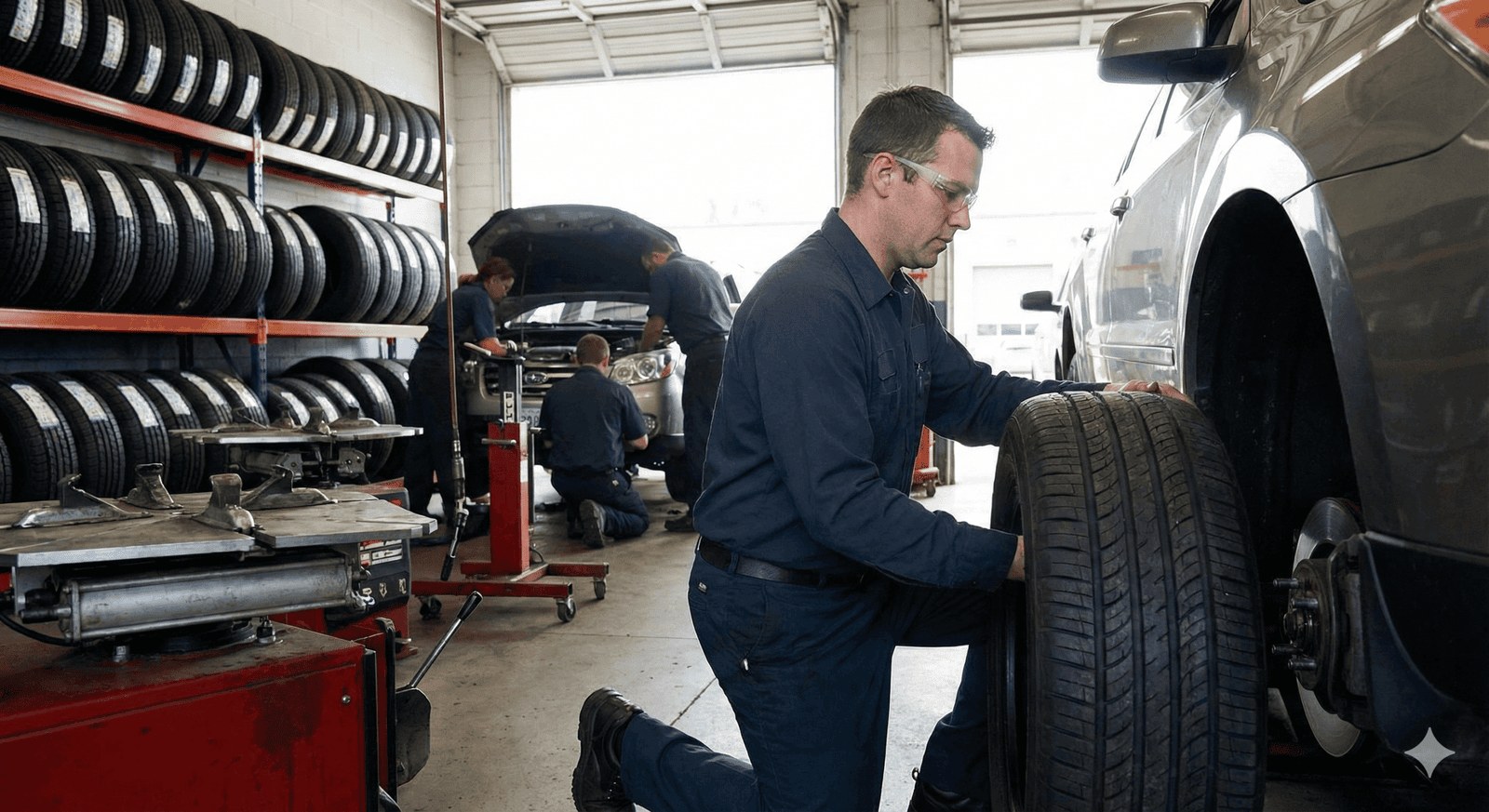
Alignment: pointing all four wheels the right way
Alignment sets the angles of the wheels: toe, camber, and caster. When those angles drift, the car pulls to one side, the steering wheel sits crooked on a straight road, and tires wear on one edge. Hitting a pothole hard, clipping a curb, or wearing out suspension parts can all knock angles out.
You can spot the clues yourself: one-sided tread wear, a pull that is not caused by road crown, or a wheel that is off-center. What you cannot do at home is measure or set the angles. That takes an alignment rack with laser or camera heads, plus the ability to free up adjustment hardware that may have been untouched for years. This is firmly professional work, and it should come after any worn steering or suspension parts are replaced, not before.
Putting the cadence together
Rotate on a fixed rhythm tied to oil service. Balance when tires are mounted, repaired, or a speed-band vibration shows up. Align when you buy new tires, after suspension work, after a hard pothole hit, or when pull and edge wear appear. At One Family Autocare in Concord, tire service is a core offering, so all three checks can happen in one visit and the technician can tell you which ones your car actually needs.
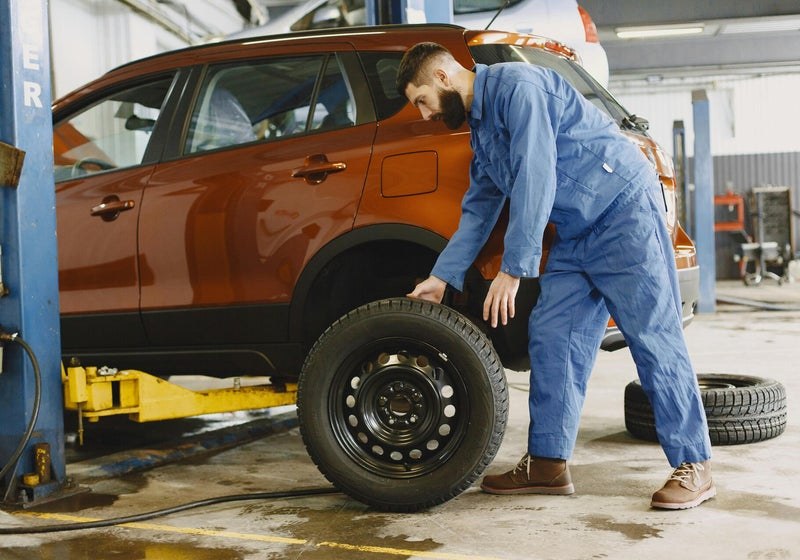
One last distinction saves real money. None of these three services fixes a worn-out part. A car with a loose tie rod end will not hold an alignment, and a tire with separated belts will vibrate no matter how carefully it is balanced. When a shop says a part must come first, that is not upselling. That is sequence.
Common questions
Do I need an alignment every time I rotate tires?
No. Rotation is routine maintenance, while alignment is a correction. Get alignment checked when symptoms appear, after suspension work, or when fitting new tires.
Why does my car shake only at highway speed?
A speed-specific shake most often points to wheel balance or a tire problem. Alignment faults usually show as pull and uneven wear rather than vibration.
Can bad alignment ruin new tires?
Yes. Angles that are well out can wear one edge of a new tire down in a fraction of its normal life, which is why an alignment check makes sense with a new set.
Photos in this guide are representative stock images.
← All guides from One Family Autocare← Back to One Family Autocare