The small spare in your trunk, the one everyone calls the donut, is not a fifth tire. It is a get-you-home device with strict limits, and the drivers who get stranded twice in one day are usually the ones who treated it like a regular tire. If you drive around Concord long enough, you will use yours. Knowing the rules before that day is the difference between a slow, dull trip to the tire shop and a second failure on the shoulder.
Start with where it lives. In most cars the temporary spare sits in a well under the trunk floor, alongside a jack and a lug wrench. In some trucks and SUVs it hangs underneath or mounts on the rear. Wherever yours is, it has probably been ignored since the car was new, which is the first problem this checklist fixes.
The donut rules, plainly stated
Temporary spares are built narrow and light to save space and weight. Their sidewalls and tread are not designed for normal service. The limits printed on the sidewall and in your manual govern, but the standard guidance is consistent: drive no faster than about 50 miles per hour, and cover no more than about 50 to 70 miles total. Less is better on both counts.
Handling changes with a donut fitted. Braking distances grow, cornering grip drops, and driver aids like stability control and ABS were tuned assuming four matching tires. On a front-wheel-drive car, many manuals prefer the donut on the rear for exactly that reason, even if the flat was up front. That means swapping a good rear tire forward first. It is more work on the shoulder, and it is the safer sequence the manual describes.
Never tow with a donut fitted, never use two at once, and get the regular tire repaired or replaced as the next trip, not the next errand on a list.
Spare tire check: do this twice a year
- Find the spare and confirm it is present. Fail: missing, or replaced by a can of sealant you did not know about.
- Check its pressure with a gauge. Most donuts need a much higher pressure than road tires, often around 60 psi as marked on the sidewall. Fail: soft to a thumb press, which most neglected spares are.
- Inspect the tread and sidewall for cracks and dry rot. Fail: deep cracking, bulges, or a tire older than about ten years regardless of looks.
- Confirm the jack, lug wrench, and any wheel-lock key are present and fit. Fail: a wrench that does not match your lug nuts.
- Check that the spare can actually come out. Fail: a rusted hold-down wing nut that will not turn by hand.
- Look at the valve stem for cracking when you bend it gently. Fail: a stem that leaks air when flexed.
- After any use, get the spare checked, reinflated, and stowed properly. Fail: a donut tossed loose in the trunk at low pressure.
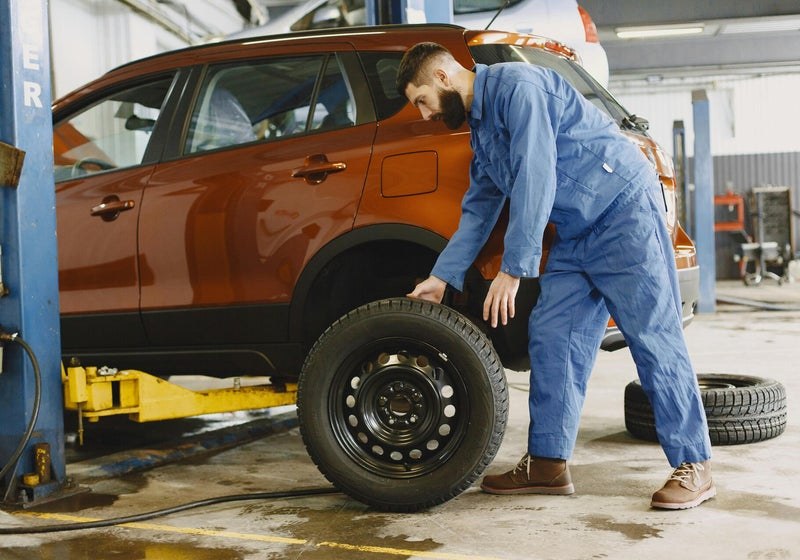
The pressure problem nobody expects
A spare loses air slowly like any tire, but it never gets checked during rotations because it never touches the road. After a few years in a hot Concord trunk, most donuts are sitting at half their required pressure or less. A donut run soft overheats and can fail within miles. That is why the twice-a-year check above matters more than any roadside skill. Five minutes with a gauge in your driveway beats learning about it at night on the highway.
While you are there, practice the sequence once: find the jack points in the manual, loosen a lug nut, lift the corner. Doing it calmly at home, in daylight, teaches your hands the job so the real version is routine instead of a first attempt under stress.
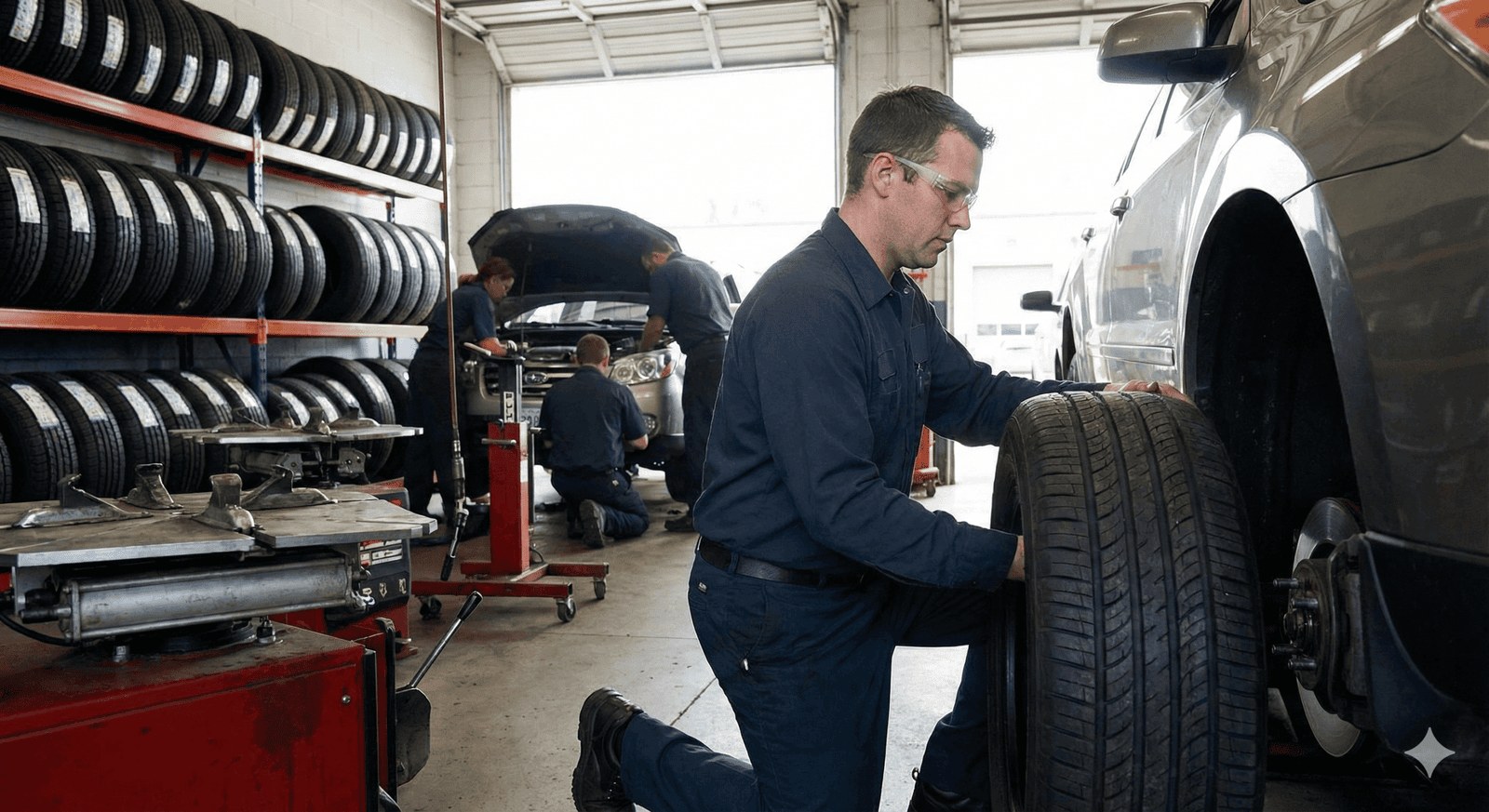
Full-size spares and inflator kits
Some vehicles carry a full-size spare. That tire can run at normal speeds, but it still needs pressure checks and rotation into service if you want it to match the set. Others carry no spare at all, just an inflator kit with sealant. Those kits handle a small tread puncture and nothing else. A sidewall cut or a bent rim defeats them completely, which means a tow. Know which setup your car has before you need it, and if it is the kit, keep the tow option in mind for any flat around Concord.
When the flat is repaired, ask the shop to check the spare as part of the visit. At One Family Autocare in Concord, tire service is a listed specialty, and a spare pressure check takes moments while the car is already in the bay.
Common questions
How fast can I drive on a donut spare?
Stay at or below the limit on the sidewall, commonly 50 miles per hour. The spare is narrower and weaker than a road tire, so braking and cornering grip are reduced.
How far can I go on a temporary spare?
Plan on the shortest trip to a tire shop, generally within about 50 to 70 miles total. Every extra mile wears a tire that was never built for distance.
Why was my spare flat when I needed it?
Spares lose air slowly for years without being checked. A twice-yearly pressure check, to the higher figure on the donut sidewall, prevents that surprise.
Photos in this guide are representative stock images.
← All guides from One Family Autocare← Back to One Family Autocare